By Phillip A. Jones, Jr.
Lawmakers in the state of Kentucky have introduced proposed legislation this year that leans heavily on Three Strikes sentencing enhancements and cutting substantive resources to marginalized demographics. The legislation — House Bill 5 — was filed at the beginning of the current session. The proposal is part of a much broader anti-crime bill designated as a priority in the 60-day session.
An early version of the bill that was rolled out prior to the beginning of the legislative session, includes a number of changes to Kentucky law, including: Life in prison for individuals found guilty of three separate violent felonies; The possibility of the death penalty for those convicted of murder of a police officer or other first responder; Classifying carjacking as a Class B felony (carjacking is currently charged as robbery under Kentucky statute); Limiting bail payments by charitable bail organizations to less than $5,000, and limiting those organizations from paying bail for people accused of some violent crimes; Allowing business owners to use force to prevent someone from escaping in cases of suspected shoplifting; Increased penalties for fentanyl trafficking convictions; and a ban on street camping, along with a provision preventing the use of federal funds to build permanent housing for homeless people if such initiatives lack “behavioral and rehabilitative requirements.”
Critics are quick to point out that the bill seems to bypass safety and opt for vengeful and reactionary over functional and appropriate. All of which begs the question: are rehabilitation and community safety really the goal?
Three Strikes
The incarcerated population in the United State hovers at just under 2 million, contributing to overall mass incarceration and other related issues. The 1994 crime bill shows that this incentivization had a negative effect on crime rates in the past. Historically, bipartisan lawmakers did not anticipate the problems associated with three-strikes laws on a nationwide level.
Studies on the efficacy of three strikes laws to minimize crime have routinely shown that these laws do more harm than good. As an example, a Federal Bureau of Investigation’s Uniform Crime Report shows that between 1990 and 2019, while there was a noticeable decline in violent crime rates, the most recent statistics years after implementation show that crime has actually increased. A similar report published by the National Institute of Justice (NIJ) indicates that imprisonment is an ineffective way of minimizing crimes.
Three strikes laws generally seek to confine a person for an indefinite or permanent period of time, a gambit that has been proven to increase, not decrease, the incarceration rate across the nation. For example, in California, where Three Strikes legislation was unanimously passed by voters in 1993, the prison population has only increased over the intervening years. More than 80,000 second-strikers and just under 8,000 third-strikers are in prison. In fact, roughly a decade after many of these laws passed, men and women serving prison time under Three Strikes sentencing accounted for 26% of the total prison population in the United States.
Ultimately, Three Strikes laws do not reduce crime through incapacitation and deterrence as promised. Instead, these laws drive up incarceration rates, which in turn increases recidivism, as well as poverty and vulnerability of the family members left behind. Three Strikes laws leave no room for those incarcerated under the legislation to improve themselves, to address their traumas, and to heal their communities. Without hope for a second chance, there is no incentive to effect substantive change.
The Human Cost
Part of the American Dream is the pursuit of life, liberty and happiness. Americans understandably prioritize personal freedoms as well as personal safety. The ideal – albeit sometimes contradictory – is a balance of protection and privacy. Which is often why voters flock to the polls when legislation promising safer streets and more police presence is on the ballot. But what many Americans do not understand is the human cost of these harsh legislative amendments.
Kentucky House Bill 5 carries a provision that would force judicial officers to sentence every defendant with a conviction for a third violent felony to life imprisonment or death. The Bill seeks to amend Kentucky Revised Statute Section 532 as follows:
“(2) Notwithstanding any other provision of this chapter, a person convicted of a violent felony who has previously been convicted of two (2) separate violent felonies shall be sentenced to:
(a) A term of imprisonment for life without benefit of probation or parole, if the felony is not a capital offense; or
(b) Death, or a term of imprisonment for life without benefit of probation or
(c) parole, if the felony is a capital offense.”
The operative term in this proposed amendment is “shall,” as it leaves judicial officers no discretion in sentencing. Under this new language, a judicial officer presented with any defendant who has been convicted of a third violent felony must sentence that defendant to either life imprisonment or death. And while stricter sentencing guidelines for violent crimes are often couched as a deterrent, it rarely is; which leaves thousands of men and women sitting in prisons across the country with no hope for release, or rehabilitation. Not only does this type of incarceration negatively affect the person serving the sentence, it impacts – and often destroys – that person’s family and loved ones. Increased life sentences also mean leaving more children without at least one parent, putting an entire generation at greater risk of poverty, addiction, homelessness and, yes, future incarceration.
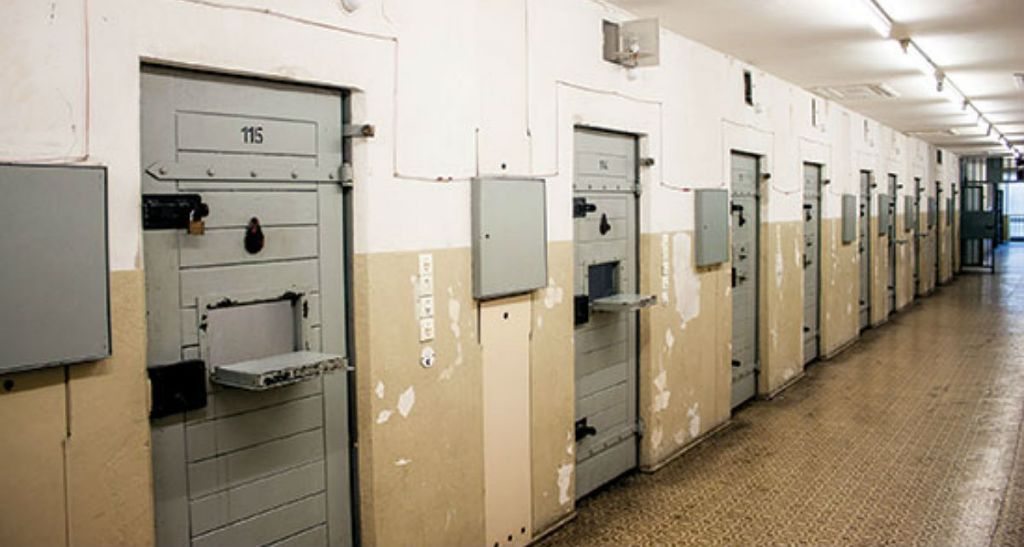
Humans are, at their core, pack animals. We seek camaraderie, support, connections. We seek our people, and even as we move in and out of life’s swirling current, our core people stay somewhere solidly within our orbit. Prolonged incarceration strips us of our ability to do what comes naturally to us as we are precluded by time, distance, and iron bars from seeking, finding and staying connected to our people. We pass holidays alone, birthdays in solitary. It is an isolating existence, and one that is conducive to neither rehabilitation nor healing.
Ironically, many prisons in this country are labeled in some way as agencies of “rehabilitation” or “correction” and many Americans take those descriptors at face value. But in reality, the American prison complex is simply a vast, multi-billion-dollar warehouse used to store human beings. There is no rehabilitation. There is no correction. There is only violence, oppression and continuous trauma. What many people fail to realize is that no one who goes into prison comes out a healthier, functional versions of themselves. If anything, men and women who have endured years of incarceration are left even more destabilized, debilitated and traumatized than they were prior to incarceration.
So does instituting mandatory sentencing laws such as Three Strikes actually reduce violent crime? The answer, based on voluminous research, is a resounding no. In 2004, several research reports presented to Justice Quarterly suggested that, during a twenty-year period that included the time before and after Three Strikes laws were implemented, no significant impact on crime rates was found in areas in which the laws were implemented. Surprisingly, the authors of the report found that the laws “were associated with an increase in homicide rates in some areas.” In fact, the only significant change in the criminal justice system after Three Strikes legislation became law in several states, was the cost of running the prison complex, which increased from $6.9 billion in 1990 to $80.7 billion in 2023. Three Strikes laws are also not a deterrent to crime. Currently, the recidivism rate in the United States hovers just above 70%. That means that seven out of every ten people released from prison will end up going back. 28 states and the federal government have enacted some form of Three Strikes legislation since 1994. And yet, the recidivism rate in the United States has only increased over the last three decades. According to a report from the United States Department of Justice, Bureau of Justice Statistics, between 2008 and 2018, 82% of people released from prison were re-incarcerated within that ten-year period. Compared to the reported recidivism rate in pre-Three Strikes-era 1990 (31.7%), the ineffectiveness of harsh sentencing is clear.
What a prolonged or indefinite prison term does to a human being is cruel and unusual punishment. At its core – and without any rehabilitative or preventative benefits whatsoever – it is inhumane. Indefinite incarceration sequesters men, women and children away from anything and everything that could provide any kind of assistance, treatment or healing. Millions of men and women with families, with children, with loved ones on the outside are all but cut off from their only sources of affection, connection and emotional support. In fact, one of the most significant tolls that prolonged incarceration takes on men, women and children is a striking increase in mental health issues. 44% of people housed in county jails and 61% of people housed in prisons have at least one diagnosed mental health issue. Comparatively, only 20-26% of Americans living freely are similarly affected.
In counterpoint, rehabilitative justice models have been proven time and again to be effective in reducing recidivism, cutting violent crime and restoring and reuniting families. Prior to the late 1970s, rehabilitation was the major focus of corrections. But in the intervening decades, deterrence, incapacitation, and retribution have been the underpinning of corrections services. In recent years, the push for restorative justice and rehabilitative treatment has reached the forefront of American politics, with Second Chance-type legislation being introduced across the country. The restorative justice model posits that instead of incarcerating individuals indefinitely or repeatedly, sending traumatized men and women back into disadvantaged communities with no skills for success, the focus should be on providing substantive supports, tools and resources to offenders that they can use to become successful members of society upon reentry.
I have been incarcerated for more than 33 years. I hit most of life’s basic milestones from a prison cell: becoming old enough to drink, getting married, getting divorced, losing my parents as well as my only two brothers. In 1990, at the age of 19, I was sentenced to two consecutive life sentences plus 20 years. The few glimpses of the free world I have been afforded over the intervening decades were from an airplane or a bus. My children grew up, my friends moved on, much of my family eventually lost track of where I was as I was shuffled through the system. Still, I remain an anomaly: I have earned my GED, taken college courses, started a nonprofit, and currently run a consulting business. But none of my successes would have been possible without the support of family, friends and loved ones on the outside. I am fortunate to have a network of resources that took me decades to build. And while I am grateful for and proud of my achievements, they were accomplished in spite of my incarceration, not because of it.



 Behind the Wall: Stories From the Inside
Leave a comment